Description
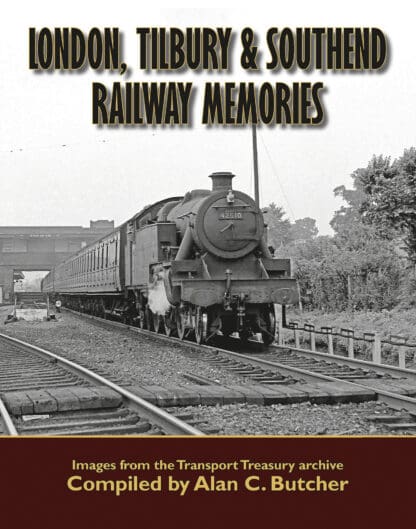
Running along the north bank of the River Thames and its estuary, from London’s Fenchurch Street station through to Southend-on-Sea and Shoeburyness, the London, Tilbury & Southend Railway, along with its associated routes, dominated the provision of railway transport in the southern part of Essex that it served. The first section of what was to become the LT&SR opened in 1854 and the route was gradually extended eastwards, reaching Southend two years later. Initially Peto, Brassey & Belts, a firm of contractors, operated the line on a 21-year lease. It was not until the 1875 that it gained its true independence being reconstituted as the LT&SR. The success of the line, in particular due to the growth of commuter traffic saw expansion in capacity. The company was to have an independent life of 37 years before being acquired by the Midland Railway on 1st January 1912. The route was to serve Essex and London under the London, Midland & Scottish Railway at the Grouping, then the Eastern Region following Nationalisation – all of whom, to a greater or lesser extent, invested in the route. Today virtually all the network inherited by the Midland Railway continues to see passenger traffic, carrying thousands of commuters to and from the capital each day. This volume will try and capture the atmosphere of the early post-World War 2 era when steam still ruled the rails.